What is NG911?

Next Generation 9-1-1 (NG9-1-1) is the evolution and modernization of our nation’s emergency communications system that was built in the 1960s and designed to function for landlines. NG9-1-1, on the other hand, is designed for how we communicate in today's connected world.
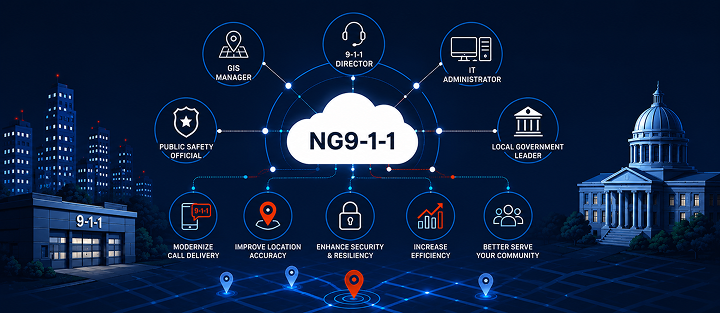
Whether you're a 9-1-1 Director, GIS Manager, IT Administrator, Public Safety official, or local government leader, this resource hub explains the fundamentals of NG9-1-1 and what agencies need to know when planning their migration.

How Is NG9-1-1 Different Than Legacy 9-1-1?

Modern Communications
Supports: Voice, Text, Images, and Video
IP-Based Infrastructure
Replaces legacy analog infrastructure with secure ESInet networking.
GIS-Powered Routing
Routes calls using validated location instead of static boundaries.
Standards-Based
Built around NENA i3 for interoperability and future scalability.

Why PSAPs are
Moving to NG9-1-1

  • Improved call routing accuracy using validated GIS location data
  • Stronger interoperability between neighboring PSAPs and agencies
  • Increased network resiliency through redundant IP infrastructure
  • Built around open standards like NENA i3 instead of proprietary systems
  • Prepared for future communication technologies without rebuilding the network

NG9-1-1 Resource Hub

NG911 Call Routing
NG911 Call Routing: How Emergency Calls Get to the Right PSAP
Learn how NG911 call routing works and why accurate routing matters for PSAPs.
Legacy 911 vs NG911
Legacy 911 vs. NG911: What’s the Difference?
Learn the differences between Legacy 911 and NG911 and why the upgrade to NG911 is so important for your PSAP.
i3 interoperability
What i3 Compliance Means for PSAPs
What the NENA i3 standard means for PSAPs, how it changes call routing, and why interoperability matters.
What is an ESInet?
What is an ESInet, How it Works, & Why it Matters
Learn more about what an ESInet is, how it supports call routing, and why ESInet reliability matters for PSAPs.
How Location Data Is Validated in NG911
How location data validation works, why GIS accuracy matters, and how PSAPs use this information to support accurate call routing.

How NG9-1-1 Works

Emergency call is placed and the caller's location is sent to the NG9-1-1 system.
NG9-1-1 validates the caller's location against GIS data to confirm routing accuracy.
The system uses the location data to identify the correct PSAP.
The call is securely delivered across the ESInet using standards defined by NENA i3.

Frequently Asked Questions

Don't see the answers you're looking for? Speak to a Synergem expert now.

Talk with a Synergem Expert Today

Critical Support

866-859-0911

Network Operations Center

866-859-0911
support@synergemtech.com

Main Office

866-859-0911
sales@synergemtech.com