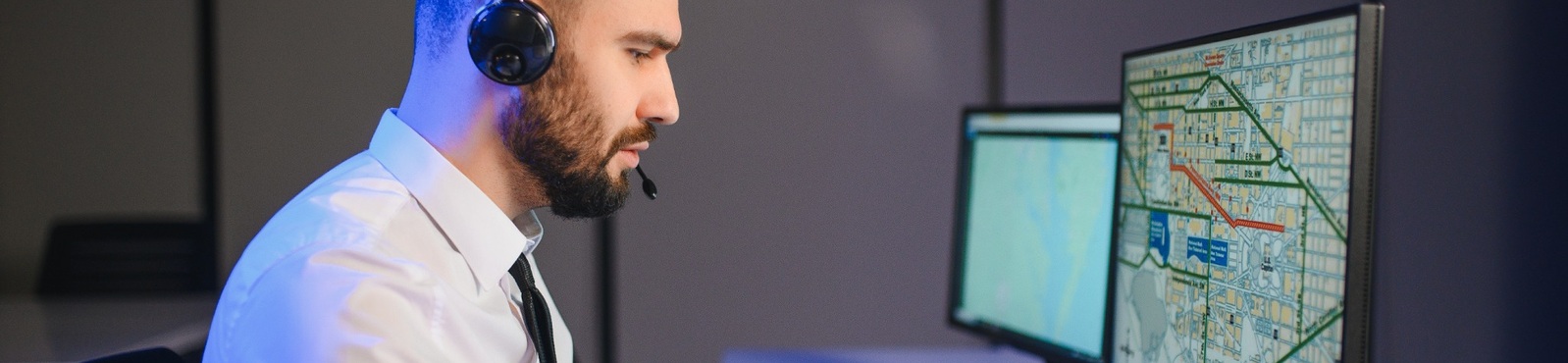

NG911 Call Routing

NG911 Call Routing
How Emergency Calls Get to the Right PSAP

Emergency call routing
Behind every emergency call is a routing process that has to identify the caller’s location, match it to the right emergency service area, apply the right routing rules, and deliver the call to the PSAP that can respond.

NG911 call routing uses IP-based networks, location data, GIS, and routing rules to send emergency requests to the correct PSAP. It replaces older routing models that were built around landlines, fixed addresses, and legacy selective routers.

This shift matters because routing is no longer just about moving a voice call from one point to another. It is about routing calls and multimedia data, better location data, GIS, policy rules, and NG911 core services to get the right information to the right PSAP at the right time.

When someone calls 911, they expect one thing to happen. The call should reach the right Public Safety Answering Point (PSAP), fast.
NG911 Call Routing Process
What Is NG911 Routing?

NG911 routing is the process of directing emergency requests to the correct PSAP using IP-based networks, location data, GIS information, and routing rules.

In an NG911 environment, routing can use more precise location information than legacy systems. It can also support different types of emergency communication, including voice, text, photos, video, and other data when the local system is ready to receive it.

Why is NG911 routing one of the most important parts of the NG911 transition?

  • If the location data is wrong, the call can go to the wrong PSAP.
  • If the GIS boundaries are outdated, the call can be misrouted.
  • If the network is not built for interoperability, the call can hit delays during transfers or failover.
GIS Service Zones with Location Pin(1)
How NG911 Call Routing Works and Why it Matters

Every NG911 environment has its own design, but the basic routing process follows a clear path.

  • A person calls or texts 911.
  • The originating service provider sends the emergency request into the NG911 environment.
  • The system receives the caller’s device location information.
  • The location is validated using GIS data.
  • The routing function determines which PSAP receives the request.
  • The call, text, or session is delivered across the Emergency Services IP Network, also called an ESInet.
  • The PSAP receives the emergency request and caller data.

For PSAPs, NG911 routing matters because it affects:

  • Call delivery accuracy & transfer efficiency
  • Operational visibility
  • Disaster recovery
  • Interoperability with neighboring agencies
  • Support for future communication types
  • Compliance with NG911 standards

NG911 Call Routing FAQs

Synergem supports the systems that help emergency requests move through standards-based NG911 environments.
NG911 Call Routing
Where Synergem Fits Into NG911 Routing

Through SynergemNET™, i3-Route™, i3-Interconnect™, and i3-Log™, Synergem helps public safety agencies and providers route, connect, and monitor emergency traffic across NG911 networks.

i3-Route™ supports NG911 routing and ESInet functionality. i3-Interconnect™ serves as the bridge between originating service providers (OSPs) and the NENA i3 ecosystem, enabling emergency calls to enter the NG911 environment regardless of whether they originate from legacy or i3-capable networks. i3-Log™ gives authorized teams visibility into significant NG911 core services events and network activity, supporting operational awareness and troubleshooting.

Together, these solutions help support one clear goal: get every emergency request where it needs to go, accurately and reliably.